Wax Beans Baked with Eggs
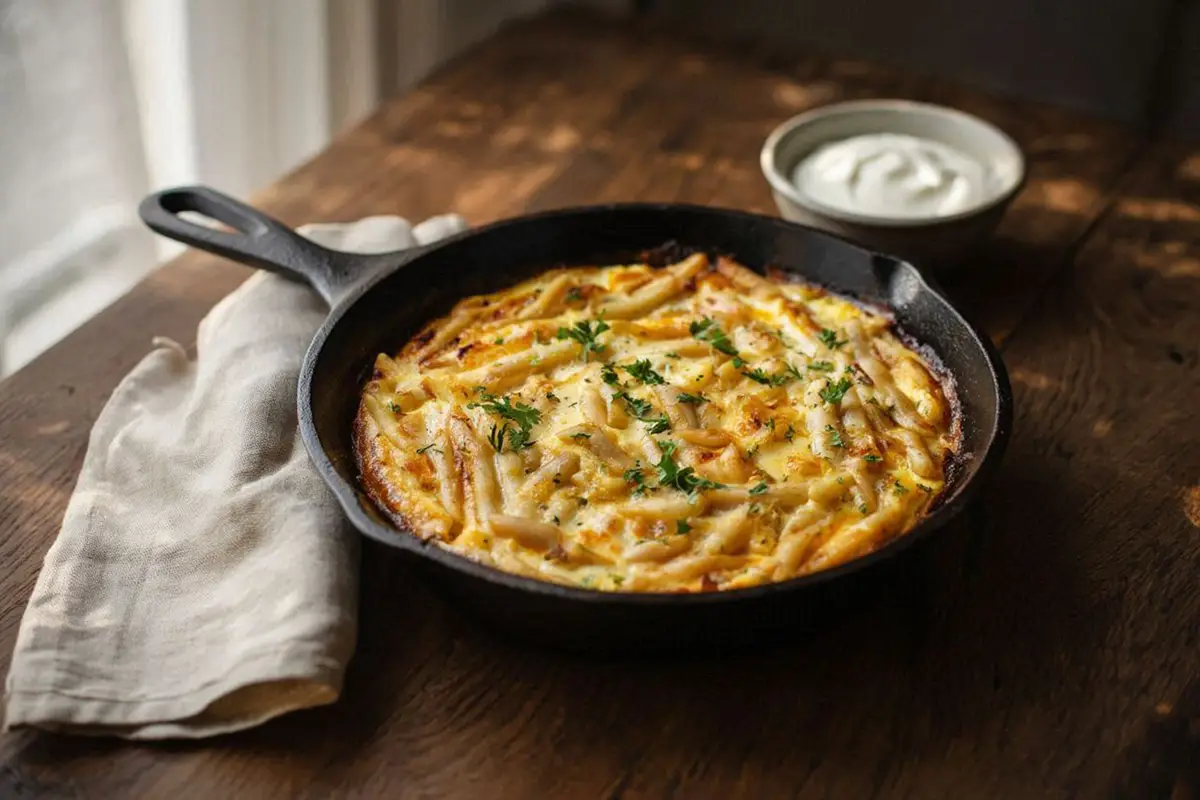
Tender yellow wax beans braised with onion and sweet paprika, finished under a golden milk-and-egg custard — a comforting Central European oven dish.
Quick Summary
Tender yellow wax beans braised with onion and sweet paprika, finished under a golden milk-and-egg custard — a comforting Central European oven dish.
Historical recipe
Modernised adaptation of an early 20th‑century source. Not independently kitchen-tested by Attic Recipes. Quantities, temperatures, and food safety guidance have been updated for a contemporary kitchen — results may vary and errors may exist. Nutritional values, where provided, are estimates only and have not been laboratory tested. Always follow current food safety guidelines for your region. If you have a health condition, allergy, or dietary requirement, consult a qualified professional before preparing this recipe.
Use of this recipe is entirely at your own risk and subject to our Terms of Service and Privacy Policy. Attic Recipes accepts no liability for any adverse outcome.
- Dairy
- Eggs
- Gluten
Additional notes
-
Warning
Contains a large-volume egg and milk custard topping baked in the oven. The custard must be fully set before serving — an undercooked custard (wobbly centre) indicates the eggs have not reached a safe internal temperature. Internal temperature should reach at least 71°C (160°F).
Use a probe thermometer to verify the custard is set through. Bake until there is no visible wobble in the centre when the pan is shaken.
-
Warning
Not suitable for people with egg or dairy allergies. Contains eggs, whole milk, and lard (if using). Major allergens: egg, milk.
For a dairy-free version, substitute whole milk with unsweetened oat milk or soy milk and use neutral oil instead of lard. The custard will be slightly less rich but will set adequately.
-
Caution
Contains gluten (flour in the roux).
Substitute with 1 teaspoon of cornstarch dissolved in a tablespoon of cold water, stirred in at the end of the braising step.
-
Note
Contains cholesterol from eggs and dairy (approximately 69mg per serving). Those managing cardiovascular conditions or dietary cholesterol should be aware.
Reduce to 2 whole eggs plus 2 egg whites, and substitute semi-skimmed milk for whole milk. The custard will set more firmly but remain pleasant.
- 1
Clean the wax beans, removing only the stem end. Leave them whole — do not cut. Wash thoroughly and set aside.
Tip Leaving the beans whole is not optional — whole beans hold their shape better under the custard and give the finished dish its characteristic texture. - 2
Melt 1 tablespoon of lard in a large, wide, oven-safe pan over medium heat. Add the finely chopped onions and fry until soft and translucent, about 5–6 minutes.
- 3
Add the whole wax beans to the pan. Salt them and stir to coat in the fat. Fry together for 3–4 minutes.
- 4
Pour in enough boiling water or broth to partially cover the beans — approximately 200–300ml. Cover and simmer on low heat, stirring occasionally, until the beans are completely soft. This will take 20–30 minutes depending on the freshness and age of the beans.
Tip Young, freshly harvested wax beans may be ready in 20 minutes. Older market beans may take up to 35 minutes. Taste for tenderness — the beans should be fully soft, not al dente, before the roux is added. - 5
While the beans are simmering, make the roux: melt 1 tablespoon of lard in a separate small pan. Add 1 tablespoon of flour and stir constantly over medium heat until the roux turns golden brown — slightly darker than a white roux, but not mahogany. Remove from heat, add the sweet red paprika, and stir well for 30 seconds off the heat.
Tip A golden roux adds a gentle nuttiness that balances the sweetness of the wax beans. Adding the paprika off the heat prevents it from burning and turning bitter. If you prefer to preserve the pale yellow colour of the dish entirely, substitute white pepper for the paprika and keep the roux light. - 6
Add the roux to the cooked beans, stirring to combine evenly. Add the chopped parsley. The beans should now be coated in a thin, lightly thickened sauce — not dry, not soupy. Adjust with a splash of broth if needed.
- 7
Preheat the oven to 180°C conventional / 160°C fan (350°F). In a bowl, beat the 4 whole eggs with the 1 litre of milk and a pinch of salt until fully combined. Pour this custard mixture over the beans in the pan.
- 8
Transfer the pan to the oven and bake for 35–40 minutes, until the custard is fully set and the top is pale golden. The centre should not wobble when the pan is gently shaken.
Tip Use an oven-safe pan — cast iron or a deep ceramic baking dish both work well. If transferring from a regular saucepan, do so carefully before adding the custard. - 9
Remove from the oven and serve directly from the pan. Accompany with soured milk, strained yogurt, or a spoonful of low-fat sour cream.
Nutrition Information per 1 portion (approx. 320g)
Nutritional values are approximate estimates and may vary based on specific ingredients used, preparation methods, and portion sizes.
Serving Suggestions
Serve directly from the pan with soured milk, strained yogurt, or low-fat sour cream. Works as a light main course or a substantial side dish alongside cold roast meats.
About This Recipe
This is a dish of two stages and two textures. First, the beans are braised low and slow with onion and a golden roux until completely tender — a process that concentrates their mild, sweet flavour. Then the whole pan goes into the oven under a blanket of milk-and-egg custard that sets to something between a savoury clafoutis and a soft frittata. The result is deeply comforting and genuinely surprising for a vegetable dish — substantial enough to serve as a light main course, delicate enough to sit alongside cold roast meats.
Yellow wax beans are used here in place of green beans. The difference is not cosmetic — wax beans have a sweeter, milder flavour with none of the faint grassy bitterness that green beans can carry, and their pale colour pairs beautifully with the ivory custard topping.
Why It Works
The two-stage cooking process is the key. Braising the beans first, until fully soft, means that by the time the custard goes in, the beans need no further cooking — the oven time is entirely devoted to setting the eggs. This prevents the two common failures of this type of dish: undercooked beans hidden under a set custard, or overcooked eggs waiting for the vegetables to catch up. The golden roux, made separately, adds a nutty depth that a white roux would not, and the paprika — used sparingly — adds warmth without heat.
On the Custard Ratio
Four eggs to one litre of milk is a very generous ratio of milk to egg — this produces a soft, barely-set custard rather than a firm one. This is intentional. The dish should yield to a spoon, not slice like a frittata. If you prefer a firmer set, reduce the milk to 750ml, but understand that you are changing the character of the dish.
Troubleshooting
- Custard not setting: Oven temperature may be too low, or the pan too deep. Ensure the oven is fully preheated. If the top is golden but the centre still wobbles after 40 minutes, cover loosely with foil and continue baking in 5-minute increments.
- Beans releasing too much water: After braising, if the beans are sitting in excess liquid, increase the heat briefly before adding the roux to reduce the liquid — the sauce should be lightly coating the beans, not pooling at the bottom.
- Paprika burning in the roux: Add the paprika off the heat, or in the final 30 seconds of frying. Ground paprika burns quickly and turns bitter.
A classic of early 20th century home cooking, preserved and adapted for the modern kitchen.
The Story Behind This Recipe
Historical Context
Baked vegetable dishes finished with a milk-and-egg custard were a hallmark of Central European household cooking in the early 20th century — an economical technique that transformed a simple braised vegetable into a substantial main course without meat. The instruction to serve with soured milk reflects the Central European tradition of pairing rich, egg-based dishes with sharp fermented dairy to cut through the fat and add brightness.
Modern Kitchen Adaptation
**On bean variety:** Yellow wax beans are used here as the preferred interpretation — they have a milder, sweeter flavour and a more delicate texture that suits the custard topping particularly well. Green beans are a valid substitute. See the linked blog post for a full comparison. **On colour and paprika:** Sweet red paprika is the historically correct spice here, but it will visibly tint the pale yellow beans. For a purer yellow result, substitute with a pinch of white pepper or omit the paprika entirely and increase the parsley. **On fat:** Lard is the traditional fat throughout. Alternatives: - *Butter* — richer, more delicate; works beautifully with the custard topping - *Sunflower oil* — neutral and lighter; suitable for a fully dairy-free version if plant milk is also used **On the custard:** 4 eggs to 1 litre of milk produces a very light, soft-set custard — more like a savoury clafoutis than a firm frittata. This is intentional. Do not reduce the milk ratio expecting a firmer result — the dish is meant to be yielding and custardy, not eggy. **On soured milk:** The traditional serving suggestion is a thin, drinking-consistency soured milk common across Central Europe. The closest modern equivalent is full-fat plain kefir, Greek yogurt thinned with a little water, or low-fat sour cream. Each adds the sharp, cooling counterpoint the dish needs.
This recipe is an independent modern adaptation developed from historical sources in the public domain. It is provided for informational and educational purposes only and does not constitute professional dietary, nutritional, or medical advice. Food preparation involves inherent risks. The reader assumes full responsibility for safe food handling, ingredient sourcing, and adherence to current local food safety guidelines. The site operator accepts no liability for outcomes resulting from the preparation or consumption of this recipe.
One recipe.
Every week.
You Might Also Like
More recipes from the same category

Asparagus Venetian Style
Fresh asparagus baked under a rich egg yolk cream sauce and a golden meringue-cheese topping. An elegant Central European appetizer.
Baked Mushrooms with Hard Cheese and Eggs
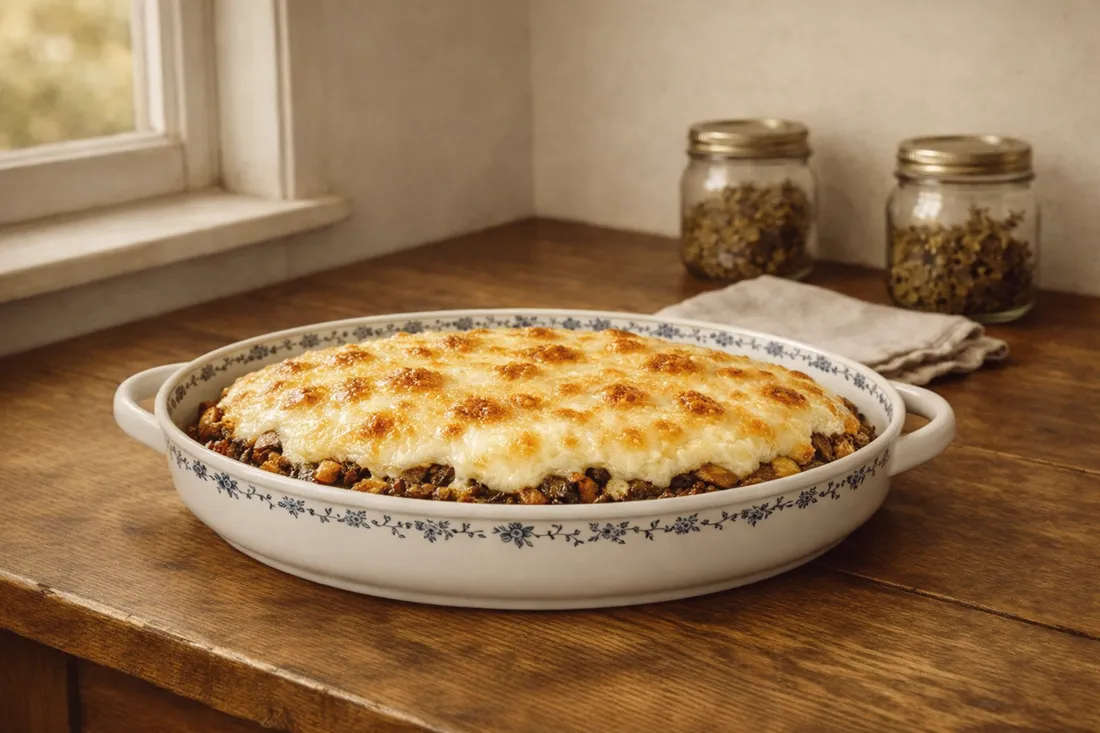
Layers of sliced hard-boiled eggs and grated cheese topped with sautéed mushrooms, baked under a rich egg-enriched sour cream topping.
Baked Eggplant with Potatoes
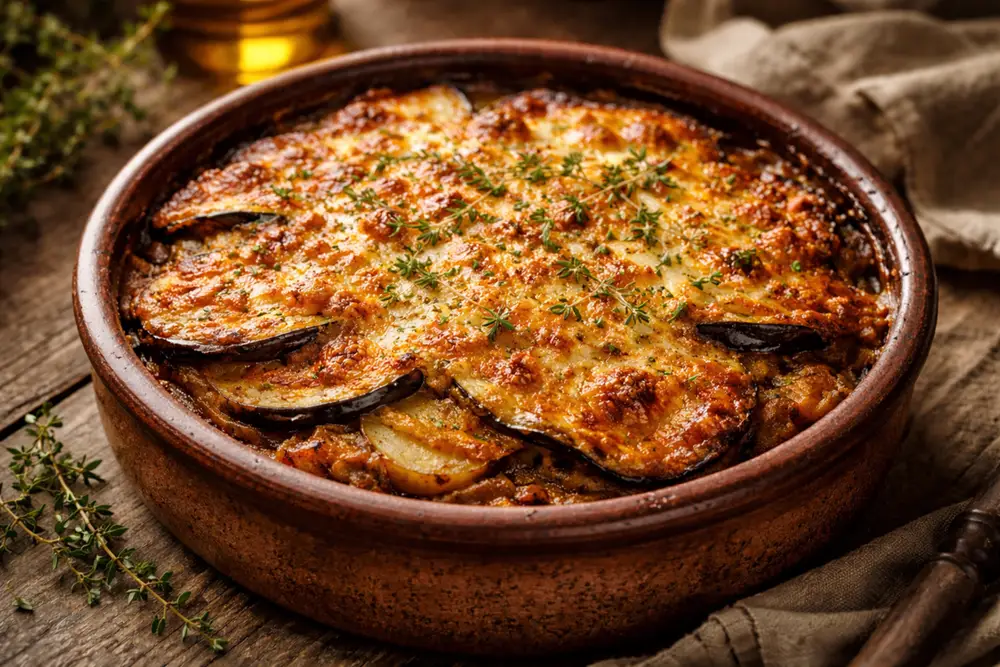
A slow-baked layered casserole of eggplant, parboiled potatoes, golden fried onion, and melted cheese.