Baked Zucchini with Sour Cream and Breadcrumbs
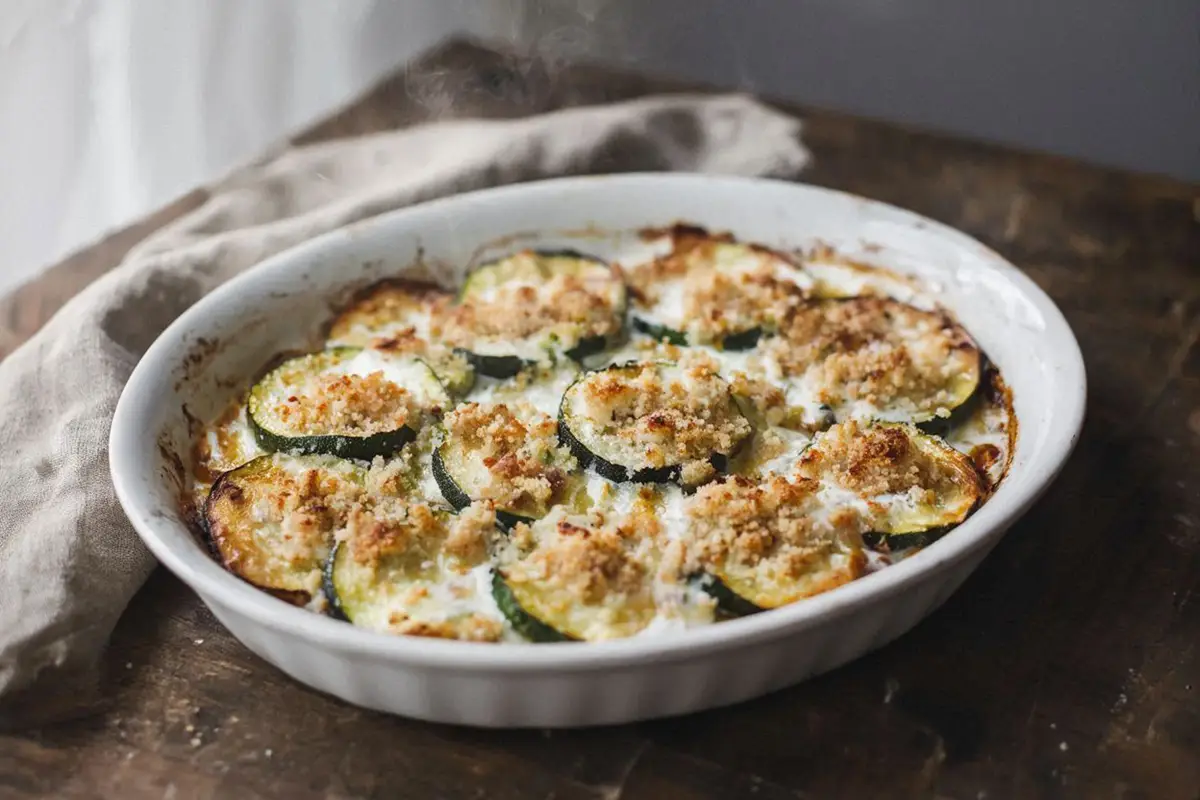
Sweet-sour boiled zucchini baked with a golden butter, sour cream & breadcrumb topping. Simple, creamy, and satisfying.
Quick Summary
Sweet-sour boiled zucchini baked with a golden butter, sour cream & breadcrumb topping. Simple, creamy, and satisfying.
Historical recipe
Modernised adaptation of an early 20th‑century source. Not independently kitchen-tested by Attic Recipes. Quantities, temperatures, and food safety guidance have been updated for a contemporary kitchen — results may vary and errors may exist. Nutritional values, where provided, are estimates only and have not been laboratory tested. Always follow current food safety guidelines for your region. If you have a health condition, allergy, or dietary requirement, consult a qualified professional before preparing this recipe.
Use of this recipe is entirely at your own risk and subject to our Terms of Service and Privacy Policy. Attic Recipes accepts no liability for any adverse outcome.
- Dairy
- Gluten
- Sulphites
Additional notes
-
Note
Contains dairy (butter, sour cream), gluten (breadcrumbs), and sulphites (white vinegar). Not suitable for those with relevant allergies or dietary restrictions.
Use plant-based butter and dairy-free sour cream for a dairy-free version. Use gluten-free breadcrumbs to make the dish gluten-free. Apple cider vinegar is an alternative to white vinegar, though it may also contain sulphites — use fresh lemon juice for a guaranteed sulphite-free version.
- 1
Wash the zucchini well. Trim both ends and cut lengthwise into slices about 1 to 1.5 cm thick — roughly the width of a finger.
Tip Young, small zucchini need no peeling. If using larger ones, peel first and scoop out any seedy core before slicing. - 2
Bring a large pot of water to a boil. Add the salt, sugar cubes, and vinegar. Add the zucchini slices carefully and cook at a gentle simmer until completely soft — about 10 to 12 minutes. Handle gently during cooking to keep the slices intact.
Tip The sugar and vinegar in the cooking water subtly balance the flavor of the zucchini and help it hold its shape. Do not skip this step — it is one of the distinctive elements of this recipe. - 3
Drain the zucchini carefully and arrange the slices in a single layer in a heatproof serving dish. Allow to drain for a few minutes — excess water will make the topping watery.
- 4
Preheat the oven to 180°C conventional / 160°C fan (350°F).
- 5
Melt the butter in a small saucepan over medium heat. Add the sour cream and stir together until well combined and heated through — do not boil. Add the breadcrumbs and stir to combine.
Tip The mixture should be loose and pourable. If it looks too thick, add a small splash of the zucchini cooking water to loosen it. - 6
Pour the hot butter, sour cream, and breadcrumb mixture evenly over the arranged zucchini, covering the surface completely.
- 7
Place in the oven and bake for 15 minutes, until the top is golden and the sauce is bubbling at the edges. Serve immediately while hot.
Nutrition Information per approx. 200g
Nutritional values are approximate estimates and may vary based on specific ingredients used, preparation methods, and portion sizes.
Serving Suggestions
Serves well as a side alongside grilled or roasted meat — pork, chicken, or veal all work well. Also good as a light vegetarian main with good bread. Serve directly from the baking dish while hot.
About This Recipe
Ten young zucchini, sliced and boiled in lightly sweetened, acidulated water until tender, then arranged in a dish and covered with a hot mixture of butter, sour cream, and breadcrumbs before a short bake in the oven. It is an unassuming recipe that delivers more than it promises — the sweet-sour cooking water gives the zucchini a subtle complexity, and the butter and sour cream topping bakes into something rich and golden that turns a simple summer vegetable into a proper side dish.
The kind of recipe that asks very little and earns its place on the table.
Why It Works
The sugar and vinegar in the cooking water do two things: they gently season the zucchini from the inside while it cooks, and the slight acidity helps the cell structure hold together better than plain salted water. The result is zucchini that is soft but not falling apart — exactly what you need for a dish that still has 15 minutes in the oven ahead of it.
The breadcrumbs in the topping absorb the butter and sour cream as the dish bakes, swelling into a soft, golden layer that sits between sauce and crust. Without them, the topping would be too liquid; with too many, it turns heavy. Four tablespoons is the right balance for this quantity.
On the Boiling Technique
Period cooks sometimes tied zucchini slices together with string before boiling — a practical way to keep them intact when cooking over a wood-fired stove where a gentle simmer was difficult to maintain. In a modern kitchen, the same goal is achieved more simply: keep the water at a calm simmer, use a wide pot so the slices can lie without stacking, and handle them with a slotted spoon rather than tongs. No string required.
Troubleshooting
Topping is watery after baking: The zucchini was not drained well enough before arranging. Pat the slices dry and allow them to sit in the dish for a few minutes before adding the topping.
Top not browning in 15 minutes: Every oven is different. Switch to the grill/broiler for the final 2 to 3 minutes — watch closely, it will brown fast.
Zucchini mushy: Overcooked in the boiling stage or baked too long. Young, small zucchini need only 10 minutes in simmering water. Check early.
A classic of early 20th century home cooking, preserved and adapted for the modern kitchen.
The Story Behind This Recipe
Historical Context
Adding sugar and vinegar to vegetable cooking water was a common technique in early 20th century Central European kitchens — a practical method for balancing the natural blandness of summer vegetables while helping them retain their shape during boiling. Zucchini, though native to the Americas, had been well established in European kitchen gardens by the 19th century. Finishing boiled vegetables with butter, sour cream, and breadcrumbs and baking briefly was a standard approach to creating a more substantial side dish from simple ingredients.
Modern Kitchen Adaptation
Period cooks often tied zucchini slices together with string before boiling — a practical solution to keep them intact over a rolling boil on a wood-fired stove. In a modern kitchen, the same result is achieved more simply: keep the water at a calm simmer, use a wide pot so the slices can lie without stacking, and handle them with a slotted spoon rather than tongs. The breadcrumb quantity has been standardised to 4 tablespoons (approximately 40g), which covers a standard 6-serving baking dish evenly.
This recipe is an independent modern adaptation developed from historical sources in the public domain. It is provided for informational and educational purposes only and does not constitute professional dietary, nutritional, or medical advice. Food preparation involves inherent risks. The reader assumes full responsibility for safe food handling, ingredient sourcing, and adherence to current local food safety guidelines. The site operator accepts no liability for outcomes resulting from the preparation or consumption of this recipe.
One recipe.
Every week.
You Might Also Like
More recipes from the same category
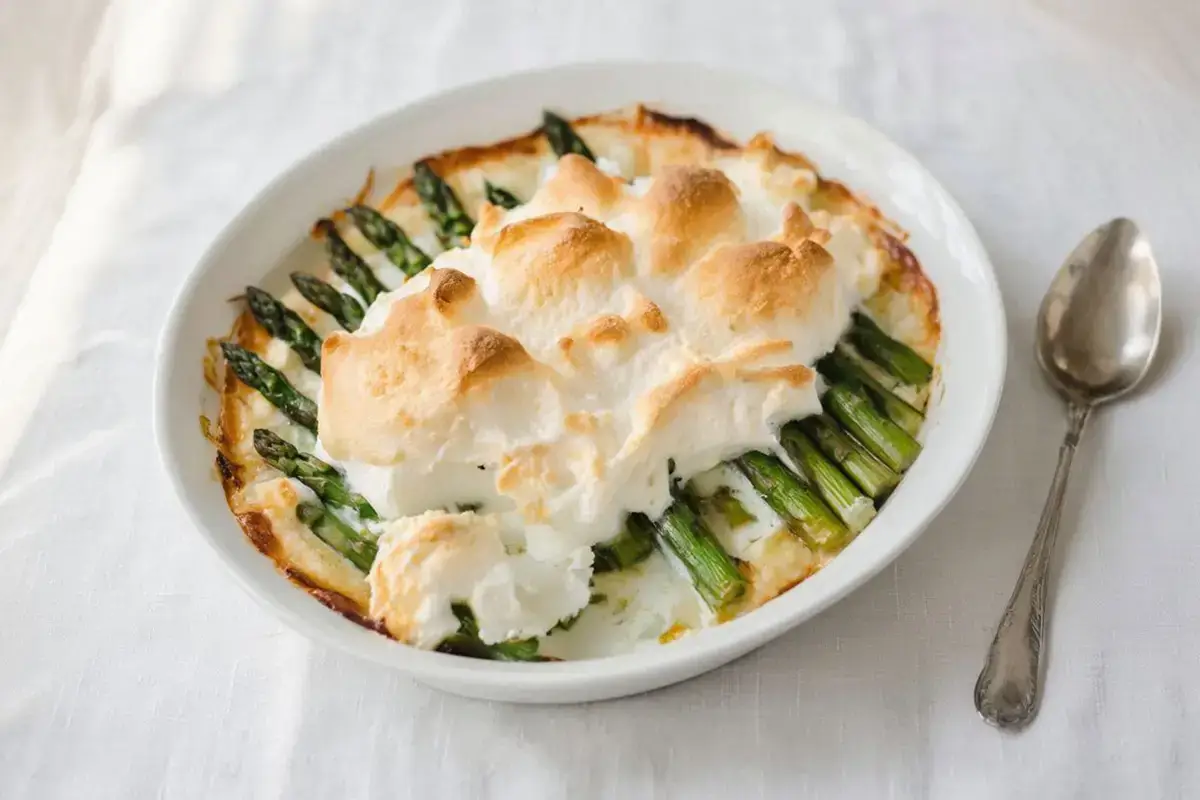
Asparagus Venetian Style
Fresh asparagus baked under a rich egg yolk cream sauce and a golden meringue-cheese topping. An elegant Central European appetizer.
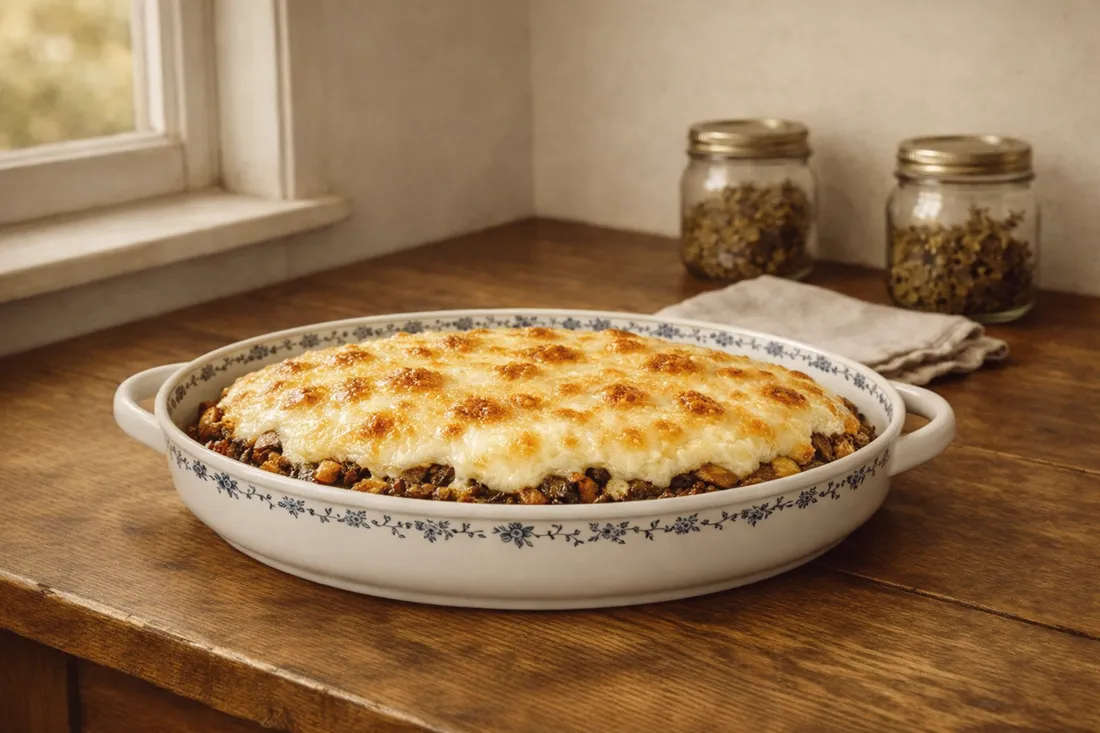
Baked Mushrooms with Hard Cheese and Eggs
Layers of sliced hard-boiled eggs and grated cheese topped with sautéed mushrooms, baked under a rich egg-enriched sour cream topping.
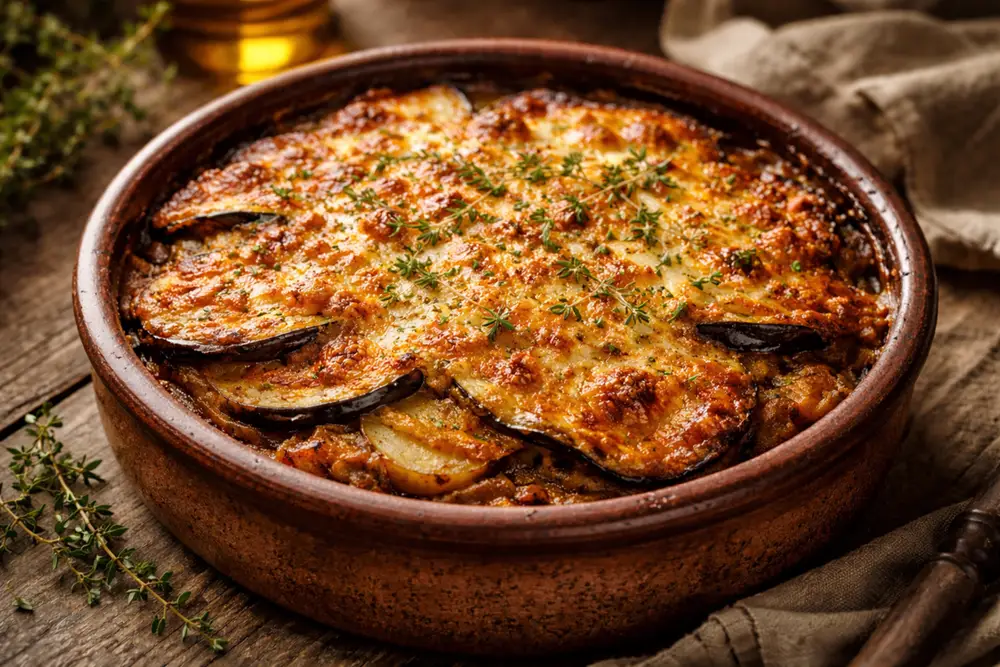
Baked Eggplant with Potatoes
A slow-baked layered casserole of eggplant, parboiled potatoes, golden fried onion, and melted cheese.